‘Phoneme fluctuation’: Empirical and theoretical limitations
Dec 14, 2025·
 ·
0 min read
·
0 min read
Benjamín Molineaux
Abstract
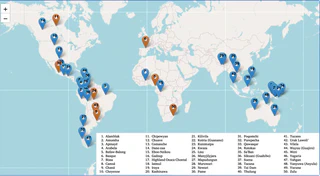
The persistent notion of ‘phoneme fluctuation’, primarily used in the SIL tradition of language documentation, presents a number of empirical and theoretical problems. In this article we examine some of the perils of the concept and look into reasons that have kept it in place. We ultimately argue that the alleged ‘unconditioned alternations’ we find in the languages where the term is used can be accounted for by more parsimonious means, compatible with descriptions of better-understood languages. We conclude that phoneme fluctuation is epiphenomenal and problematic insofar as it creates a veneer of ‘exoticism’ or ‘simplicity’ around the languages so described.
Type
Publication
In Phonology Squib (Accepted)
